Window tint is one of the smartest upgrades you can make on a vehicle in Florida — but only if it's done within the law. Get the percentage wrong and you're looking at fix-it tickets, fines, and the cost of stripping and re-installing film. Get it right, and you stay cool, protected, and ticket-free.
Here's exactly what Florida law allows in 2026, explained in plain English by a shop that installs legal tint on the Treasure Coast every week.
First, understand VLT
Every tint conversation comes down to one number: VLT, or Visible Light Transmission. It's the percentage of light the glass and film let through combined.
The key thing to remember: a lower number means a darker tint. A 5% film is nearly blacked out. A 70% film looks almost clear. Florida law sets minimum VLT levels — meaning there's a limit to how dark you can legally go.
The legal limits for a sedan
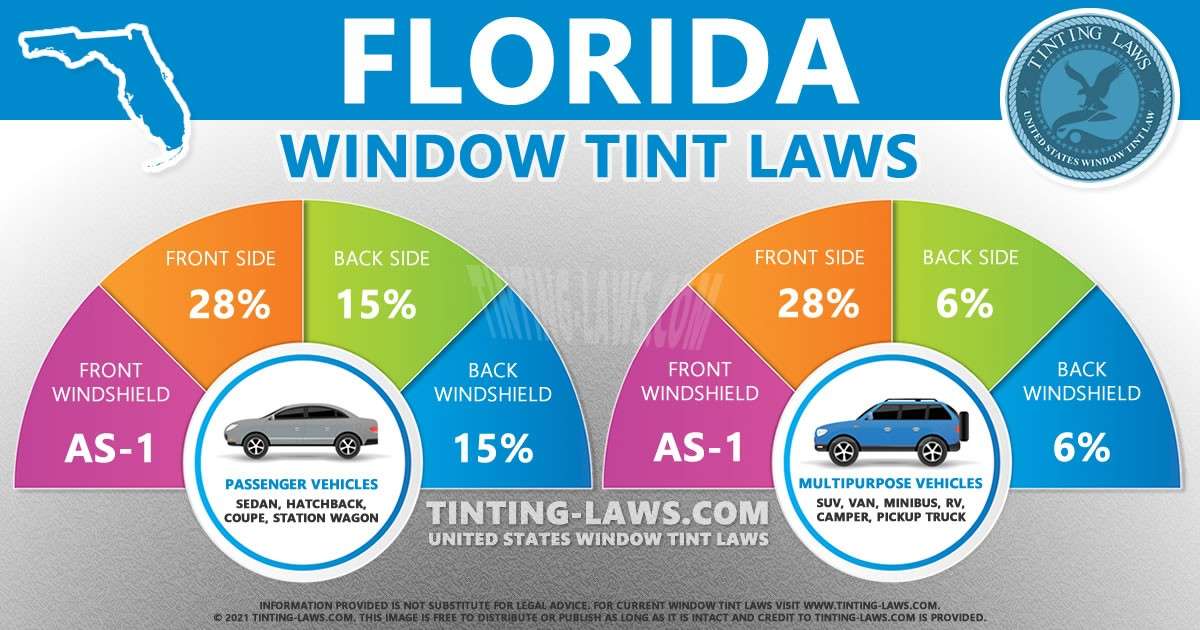
For a standard passenger car in Florida:
- Front side windows: must allow at least 28% VLT (this is the one police check most often)
- Back side windows: at least 15% VLT
- Rear window: at least 15% VLT
- Windshield: non-reflective tint is allowed only above the AS-1 line — the factory-etched mark near the top of the glass, roughly the top five to six inches
The legal limits for SUVs, trucks & vans
Florida classifies SUVs, vans, and most trucks as "multipurpose vehicles," and they get a darker allowance behind the driver:
- Front side windows: still 28% VLT (same as everyone)
- Back side windows and rear window: can go all the way down to 6% VLT — effectively limo-dark
This is the single biggest difference between vehicle types, and it's why an SUV can run much darker rear glass than a sedan legally can.
Reflectivity and color rules
Florida doesn't just regulate darkness — it limits the mirror-like, metallic look too:
- Front side windows: no more than 25% reflective
- Back side windows: no more than 35% reflective
And certain tint colors are banned outright on any window: red, amber, and blue. Stick to neutral shades — charcoal, black, or gray. (Quality ceramic films are neutral by design, so this is rarely an issue with premium tint.)
Medical exemptions
Florida does allow a medical exemption for drivers with conditions requiring reduced sun exposure. It requires a physician's certification, and that documentation has to stay in the vehicle. If you think you qualify, talk to your doctor — and let us know before we cut film, so we can spec it correctly.
What about the windshield?
You can't legally apply a dark, visible film across the full windshield in Florida — only the strip above the AS-1 line. But here's the upgrade most people don't know about: a clear ceramic IR windshield film blocks the majority of heat and UV without visibly darkening the glass. It's fully legal, it doesn't touch your visibility, and on a Florida windshield it's one of the best heat-reducing upgrades available.
What happens if your tint is too dark?
During a stop, an officer can measure your windows with a tint meter. Tint that's darker than the legal minimum can earn a noncriminal traffic infraction — typically a fine in the range of roughly $73 to $165, plus the hassle of correcting it. Florida also requires a manufacturer's certification sticker between the film and the glass on tinted windows.
The bottom line: the few percent you'd gain going illegally dark on your front windows isn't worth the ticket — especially when a quality 30–35% ceramic film already rejects serious heat while staying street-legal.
Get it done right the first time
At Garage Kept Detailing in Stuart, we walk every client through the legal VLT options for their specific vehicle before any film is cut — so you get the look and heat rejection you want without crossing the line. We serve Stuart, Palm City, Jensen Beach, Port St. Lucie, Jupiter, and the wider Treasure Coast.
Request a Quote or call (772) 971-3479 — we'll spec a legal, Florida-tough tint package for your car.
This article is general information, not legal advice. Tint enforcement can vary by officer and county; when in doubt, stay at or above the legal minimums.