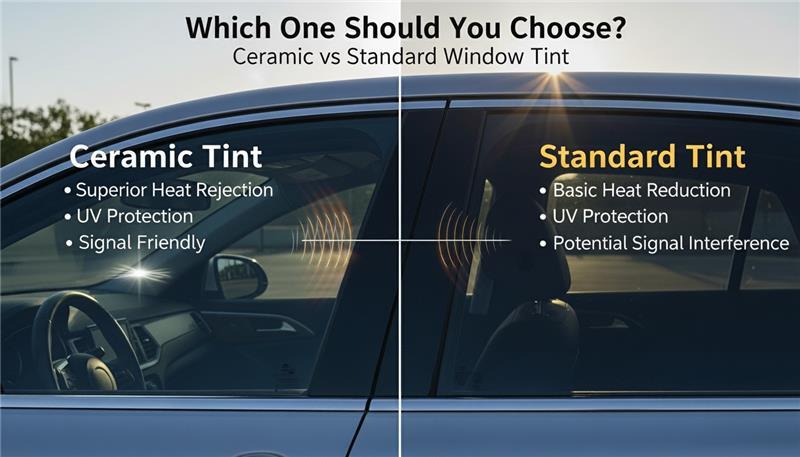
Not all window tint is created equal. Two films can look identical in the driveway and perform completely differently once the Florida sun goes to work. The difference isn't the shade — it's what the film is made of.
If you're choosing tint for a vehicle on the Treasure Coast, here's what actually separates the three main tiers, and how to pick the right one for how you drive.
Standard film (dyed and hybrid)
Standard tint is the entry tier — typically dyed film, sometimes a dyed-and-metal hybrid. It darkens the glass, cuts glare, and blocks a good amount of UV. For a budget build or a vehicle you won't keep long, it does the basic job.
Where it falls short in Florida: dyed film rejects relatively little infrared heat — the part of sunlight you actually feel as warmth. It looks dark, but your cabin still bakes. And cheaper dyed films are the ones notorious for fading and turning purple over time under intense UV.
Best for: budget-conscious drivers, older vehicles, or anyone who mainly wants the look and basic glare control.
Ceramic film
Ceramic tint is built from nano-ceramic particles instead of dye or metal. That construction is what makes it the sweet spot for most Florida drivers:
- Strong infrared heat rejection — a noticeably cooler cabin and less strain on your A/C
- Up to 99% UV blockage — protecting your skin, eyes, and interior
- Signal-safe — because it's non-metallic, it won't interfere with your phone, GPS, Bluetooth, satellite radio, or key fob
- Color-stable — it won't fade or turn purple the way cheap dyed film does
Ceramic gives you serious performance without having to go extremely dark — you can stay at a legal, lighter shade and still reject a lot of heat.
Best for: the majority of daily drivers, luxury and enthusiast vehicles, and anyone who wants long-term performance that holds up to Florida sun.
IR (infrared) film — the top tier
IR film is the highest tier of modern window tint, engineered specifically to reject the maximum amount of infrared heat. The standout advantage: it rejects heat without needing to be dark.
That's a big deal in Florida. With premium IR film, you can run a lighter, more factory-correct shade and still drop cabin temperatures dramatically on a hot day. It's also available as a clear or near-clear windshield film — fully legal, invisible, and one of the best heat upgrades you can put on a car here.
Best for: owners who want the coolest possible cabin, drivers with large glass areas (panoramic roofs, EVs), and anyone protecting a premium interior for the long haul.
So which should you choose?
For most Treasure Coast drivers, ceramic is the practical sweet spot — excellent heat and UV rejection, signal-safe, color-stable, and reasonably priced. If you want the absolute maximum heat rejection or you're protecting a high-end interior, IR is worth the step up, especially paired with a clear IR windshield film. Standard film makes sense mainly when budget is the deciding factor.
The honest truth: in Florida, the heat-rejection difference between a cheap dyed film and a quality ceramic or IR film is something you feel every single time you get in the car. It's the upgrade owners tell us they notice most.
Let's match the film to your car
At Garage Kept Detailing in Stuart, we don't believe in a one-size-fits-all film. We walk through your options — standard, ceramic, and IR — and recommend what fits how and where you drive, including the legal Florida VLT for each window. We install trusted names like XPEL, SunTek, LLumar, 3M, and more, serving Stuart, Jupiter, Port St. Lucie, and the wider Treasure Coast.
Request a Quote or call (772) 971-3479 to talk through the right tint tier for your vehicle. Learn more about our window tint service.