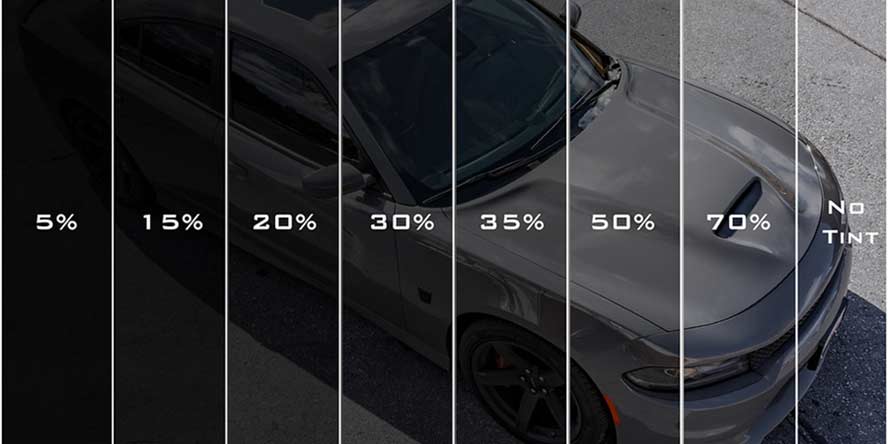
"What percent should I go with?" is the question we get more than any other. And it's a good one — the shade you choose changes the entire look of your car, how much heat it rejects, how much privacy you get, and whether it's even legal on your front windows.
The number everyone's talking about is VLT — Visible Light Transmission, the percentage of light the glass lets through. Here's the part that trips people up: the lower the number, the darker the tint. 5% is nearly blacked out. 70% is almost clear.
Let's walk through the common shades, what each one actually looks like, and who it's right for.
A quick word before the numbers
VLT is a combined measurement — your film plus your factory glass. Most cars already come with a slight factory tint, so a 35% film won't always land at exactly 35% on the meter. That's why we measure and advise on your specific vehicle before cutting anything. The shades below are the general look you can expect.
The shades, from darkest to lightest
5% — "Limo"
Nearly black. You can barely see in from outside. Maximum privacy and a bold, blacked-out look. In Florida this is only legal on the rear glass of SUVs, vans, and trucks — never on front side windows, and not on a sedan's rear. Popular for the back of an SUV where privacy is the goal.
15% — "Limo-ish"
Still very dark with strong privacy, but slightly more visibility than 5%. Legal on the rear windows of a sedan and the rear of SUVs. A common choice for rear glass when you want privacy without going fully blacked out.
20% — Dark
A sleek, noticeably dark look that still lets you see out at night reasonably well. Great on rear glass. Not legal on Florida front side windows (it's darker than the 28% minimum), but a popular rear-window pick.
30–35% — The sweet spot
This is the most-requested shade for front windows, and for good reason. It gives a clean, factory-correct darkness, real glare reduction, and — with a ceramic or IR film — serious heat rejection, all while staying street-legal on Florida front windows (which require at least 28% VLT). If you want one shade that looks great and keeps you legal, this is usually it.
50% — Light
Barely-there darkening, but with a quality ceramic film it still blocks a lot of UV and heat. Ideal if you want protection and comfort without changing the look of the car much. A smart choice for drivers who want function over a dark appearance.
70% — Nearly clear
You can hardly tell it's there. This is where clear ceramic and IR films live — they reject heat and UV while keeping the glass looking untinted. Perfect for windshields, where dark film isn't legal but heat is brutal, or for owners who want max comfort with zero visible change.
How to actually choose
A few questions we walk every client through:
- What's the goal — looks, heat, or privacy? Heat rejection comes from the film quality (ceramic/IR), not just the darkness, so you don't have to go dark to stay cool.
- Which windows? Many people run a legal ~35% on the fronts, something darker (15–20%) on the rears for privacy, and a clear IR film on the windshield. You don't have to pick one number for the whole car.
- What's legal? On Florida front side windows you must stay at 28% VLT or lighter. Sedans need 15%+ on the rears; SUVs and vans can go much darker in back. For the full breakdown, see our guide to Florida window tint laws.
The biggest myth we bust: darker does not mean cooler. A premium 35% ceramic film will out-reject heat against a cheap 5% dyed film every time. Shade is about looks and privacy; heat rejection is about the film you choose.
See it on your car before you commit
At Garage Kept Detailing in Stuart, we'll show you how each shade looks on your specific vehicle, confirm what's legal for each window in Florida, and recommend a setup that matches how you drive — serving Stuart, Palm City, Jensen Beach, Port St. Lucie, Jupiter, and the Treasure Coast.
Request a Quote or call (772) 971-3479 and we'll help you dial in the perfect shade. Learn more about our window tint service.